Why Madrid?
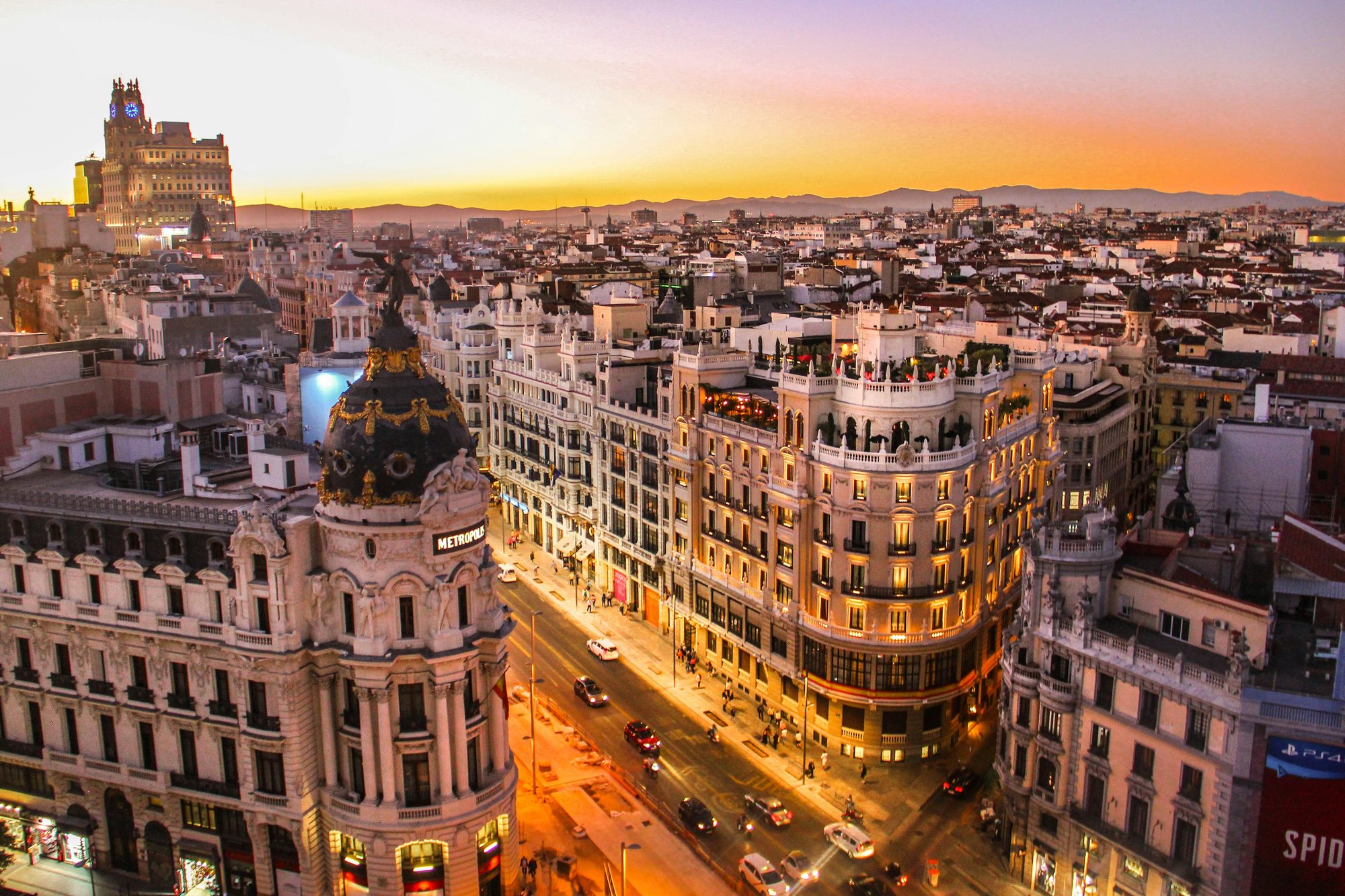
Madrid is the obvious answer to "where in Spain should I land first?" — and for most nomads on the DNV, it's the right one. The city has Spain's highest concentration of remote-friendly cafés, the country's biggest coworking ecosystem, the most direct international flights, and the most legible bureaucracy: Madrid hosts the UGE-CE itself, so applying from inside Madrid is the closest possible position you can be in.
It is also the city Spain's other cities measure themselves against. The pace is faster than Seville, the cost lower than Barcelona, the food a kind of national average — every regional cuisine has its embassy here. And Madrid winters are cold by Mediterranean standards (frost on cars in January) and Madrid summers are an oven (35–40°C in July and August). Most nomads spend July and August somewhere on the coast.
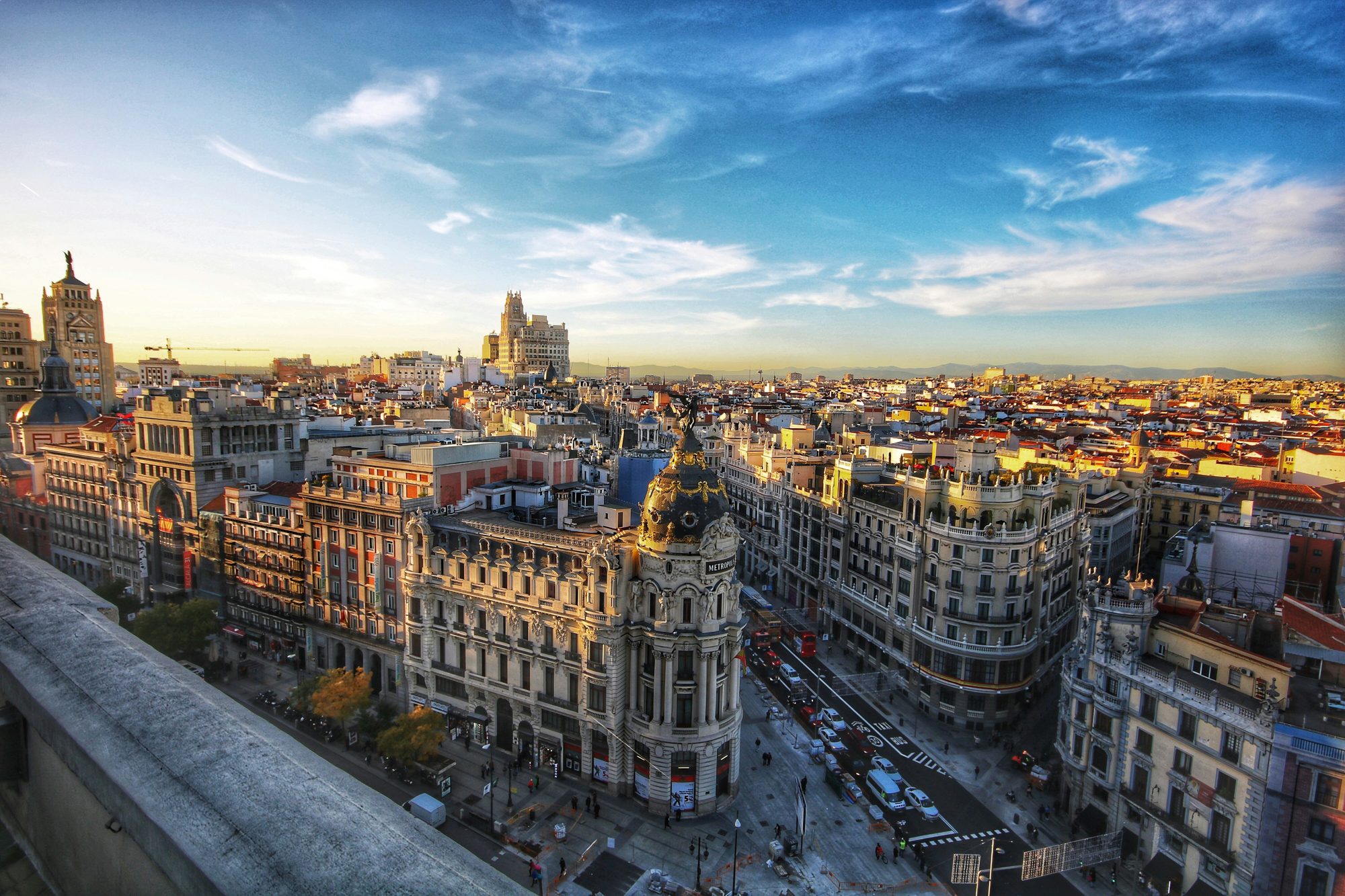
Neighbourhoods to know
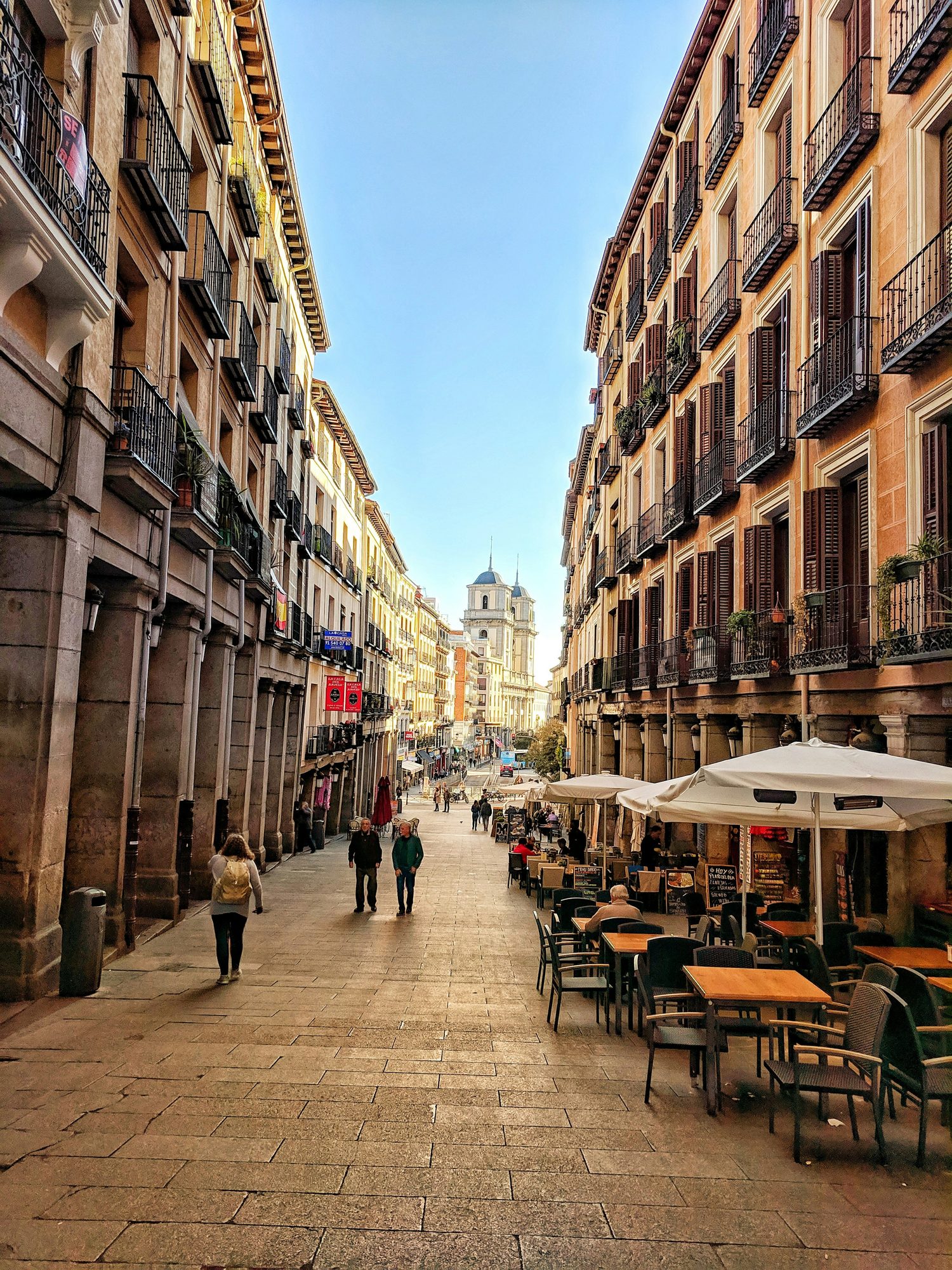
- Malasaña — Madrid's creative-class neighbourhood. Independent bookshops, cafés that take laptops seriously, tightly packed nightlife. Most popular with nomads under 35. Rent: €1,250–1,800 for a 1BR.
- Chueca — adjacent to Malasaña, slightly older crowd, the city's LGBTQ+ centre, a strong restaurant scene. Slightly quieter at 11pm, slightly louder at 2am. €1,300–1,900 for a 1BR.
- Lavapiés — the most international neighbourhood and one of the cheapest in central Madrid. Diverse food (Bangladeshi, Senegalese, Argentinian), strong street art, more grit. €900–1,400 for a 1BR.
- Chamberí — quieter, residential, 19th-century buildings, the city's most "liveable" central barrio. Excellent for slightly older or family-stage nomads. €1,400–2,200 for a 1BR.
- La Latina — the tapas-and-tapas neighbourhood, all narrow streets and Sunday-rastro crowds. Rents trend high. €1,400–2,000 for a 1BR.
- Salamanca — Madrid's upscale district, broad avenues, designer shops, embassy row. The most expensive central neighbourhood and the most polished. €1,700–2,800 for a 1BR.
Cost of living, in honest numbers
For a single nomad living modestly central:
- Rent, 1BR central: €1,200–1,800. Outer ring drops to €800–1,100.
- Utilities (electricity, gas, water, internet): €120–180/mo combined.
- Groceries (Mercadona, Lidl, Carrefour Express): €250–400/mo.
- Coworking: €180–280/mo for a hot-desk; €350–500 for a fixed desk.
- Lunch out (menú del día): €12–16. Madrid's fixed-price lunch menu is a quiet wonder of the world.
- Coffee: €1.20–2.20 for a café con leche; €3.00+ at speciality shops.
- Metro / bus pass: €54.60/mo unlimited (Zona A).
- Total minimum: ~€2,000–2,400/mo if you're careful, ~€2,700–3,200/mo if you're comfortable.
Coworking and remote-friendly cafés
Coworking is mature in Madrid. Three notable chains plus a few independents worth knowing:
- Utopicus — the local original, multiple sites, strong community programming.
- WeWork — five Madrid sites, the standard global chain experience.
- Impact Hub Madrid — Lavapiés-based, tilt toward purpose-driven and social-impact companies.
- La Industrial — Malasaña's quietest, prettiest coworking, in a converted mid-century print shop.
For solo café work: Toma Café (Malasaña, two locations), HanSo Café (Malasaña), Misión Café (Chueca and Conde Duque), and Café de la Luz (Malasaña) all welcome laptops. Avoid traditional Spanish bars during the lunch service (1:30–4:00pm) — it's seen as occupying a paying table.
Things to do that aren't cliché
- Free Prado at sunset — the museum is free Mon–Sat 6–8pm and Sundays 5–7pm. Local move: arrive at 6pm, do one room properly, leave.
- Sunday Rastro — Madrid's flea market, all of La Latina filled with stalls, then onward to vermouth at the bars on Cava Baja.
- Templo de Debod — a real Egyptian temple gifted to Spain in the 1960s, with one of Madrid's best sunset views over the Casa de Campo.
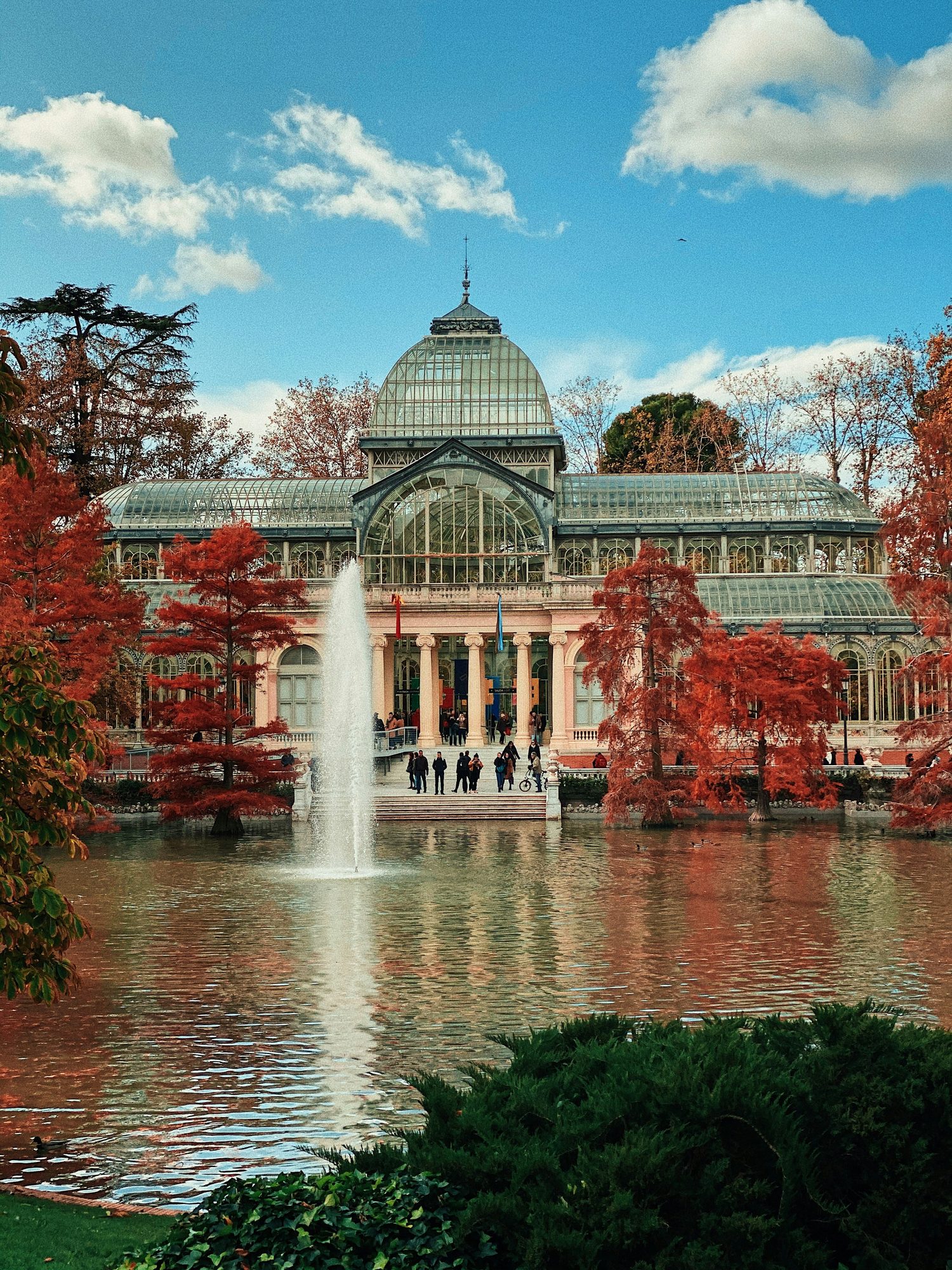
- El Retiro at 10am — the city's central park, before the tourists. Coffee at the Crystal Palace café, then a walk around the rose garden.
- Vermouth hour — 1pm Sunday is a religious institution. Bodega de la Ardosa in Malasaña or La Venencia in Sol if you want sherry instead.
- Toledo day trip — 33 minutes by AVE high-speed train. UNESCO site, three civilisations, much quieter than Madrid.
Practical tips
- Empadrónate fast. The Madrid Ayuntamiento accepts the empadronamiento appointment 7–14 days out. Some neighbourhoods (Centro, Salamanca) are slower; Tetuán and Carabanchel are faster.
- The metro is excellent. Don't drive. Madrid's car-restriction zone (Zona de Bajas Emisiones) covers the whole city centre. Most rentals there ban older cars completely.
- August is a real thing. The city empties out for the first three weeks of August. Many small businesses, your local panadería, and quite a few restaurants close completely. Plan around it.
- Spanish lunch culture matters. Lunch is 1:30–4pm, dinner is 9–11pm. Sticking to American hours means eating in mediocre tourist restaurants.
- The UGE is in Madrid. If you're applying for the DNV via the in-Spain route, your physical proximity to the UGE-CE office is a small but real advantage. Lawyers in Madrid have walked-in same-day appointments more often than lawyers based elsewhere.
Next steps
- Read the visa guide if you haven't yet.
- Open the checklist and start the slow paperwork.
- Compare cities — try Barcelona, Valencia, or Málaga for warmer-coast alternatives.
- Pair with our culture essays — Survival Spanish phrases and Spanish coffee culture.